What is Milakpur Dham and why is it important?
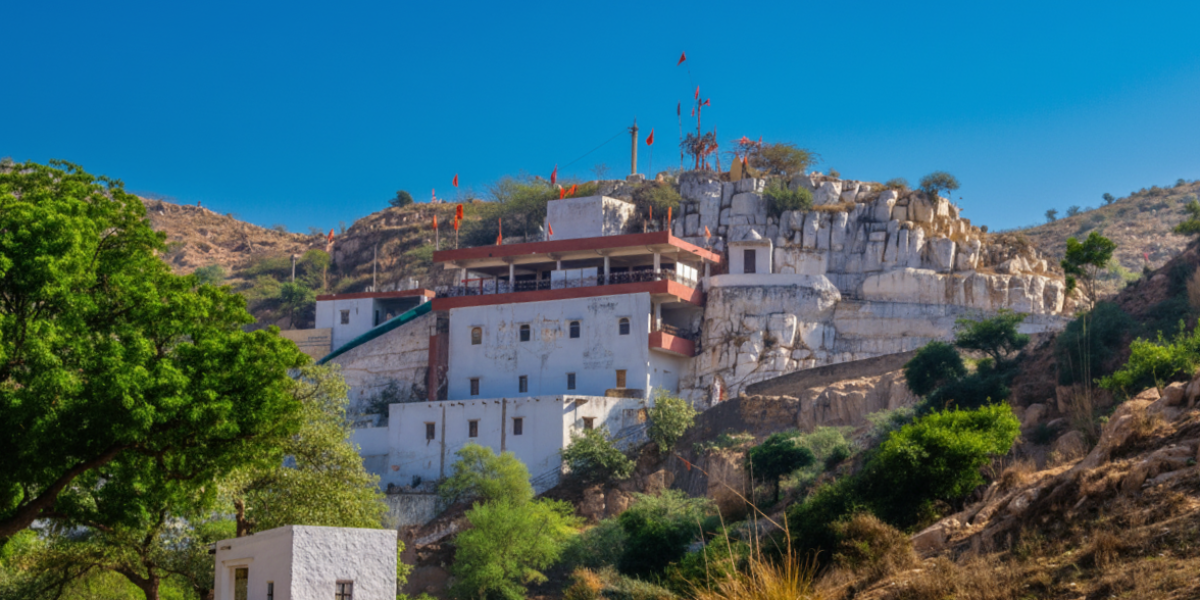
Milakpur Dham, also known as Kali Kholi Dham, is the principal tapo-bhoomi (place of penance) and sacred seat (gaddi-sthal) of Baba Mohan Ram Ji. Located in the hills near Bhiwadi in the Alwar district of Rajasthan, it is revered as the place where his divine presence continues through the Akhand Jyoti and an uninterrupted centuries-old tradition of seva. Devotees from Rajasthan, Haryana, Delhi, and other regions visit Milakpur Dham seeking blessings, protection, and spiritual solace.
When did the story of Milakpur Dham begin?
The origins of Milakpur Dham trace back to the early 16th century (around 1530 CE). During this period, a devout Brahmin and cowherd named Nandu, also known in some traditions as Lallu or Nandu Bhagat, lived in the village of Milakpur in present-day Alwar district. His deep devotion to Bhagwan Krishna laid the spiritual foundation for the appearance of Baba Mohan Ram Ji and the eventual establishment of the Dham.
How did Baba Mohan Ram Ji first reveal himself at Milakpur?
According to traditional belief, while grazing his cows in the dense forests and rocky hills near Milakpur, Nandu Bhagat once lost a cow and went searching for it in the Kali Kholi region. There, he experienced a divine vision in which Bhagwan Krishna appeared in a unique roop, later worshipped as Baba Mohan Ram Ji. This revelation was a blessing granted in recognition of Nandu Bhagat’s unwavering faith, simplicity, and pure devotion.
What role did Nandu Bhagat play in the creation of Milakpur Dham?
After receiving divine darshan and blessings, Nandu Bhagat renounced worldly attachments and dedicated his life entirely to devotion and service. Following Baba Mohan Ram Ji’s guidance, he began living near the present temple site, serving cows, helping the distressed, and maintaining a sacred flame. His life of selfless seva gradually transformed the area into a recognized and revered place of worship.
How did the Akhand Jyoti of Milakpur Dham start?
The Akhand Jyoti at Kali Kholi is believed to have been kindled by Nandu Bhagat or his immediate lineage as a symbol of Baba Mohan Ram Ji’s eternal presence and divine protection. Devotees offer ghee to this sacred flame, which is traditionally said to have been continuously maintained for around 350 years, passed down through successive generations of the bhagat family without ever being allowed to extinguish.
How did a small place of worship become a full Dham and temple?
Over time, stories of miracles, healing, and relief experienced by devotees spread across nearby villages and distant regions. As the number of pilgrims increased, the humble place of worship gradually evolved into a formal temple and Dham. The bhagat lineage continued to manage daily aarti, seva, and arrangements for pilgrims, firmly establishing Milakpur Dham as a major spiritual center.
What instructions are associated with the establishment of the temple at Milakpur?
Traditional accounts state that Baba Mohan Ram Ji instructed his devotees to establish a temple in his name at Milakpur—the village where his first devotee, Nandu Bhagat, lived and served. Because of this divine command, Milakpur is regarded as his primary gaddi-sthal, and devotees are often advised to take darshan here first before visiting other associated places connected to his leelas.
What physical features and sacred spots mark the inception story today?
Today, devotees visit several sacred landmarks associated with the early history of Milakpur Dham, including:
-
The cave in the Kali Kholi hills linked to Baba Mohan Ram Ji’s tapasya
-
The Akhand Jyoti
-
The kund or johad connected with the cowherd stories of Nandu Bhagat
-
Rock imprints believed to be associated with the divine blue horse
The surrounding Aravalli hill paths continue to remind pilgrims of the original leelas and the spiritual beginnings of the Dham.
How is the legacy of Milakpur Dham’s inception preserved today?
The seva tradition initiated by Nandu Bhagat continues through his descendants, who serve as pujaris and caretakers of the temple. They are responsible for maintaining the Akhand Jyoti, daily worship, and temple activities. Regular melas on Dauj and Chemai Dauj, continuous bhajan-kirtan, and charitable services for devotees and animals ensure that the original spirit of compassion, protection, and selfless service remains alive at Milakpur Dham.