Ann Daan: The Most Sacred Charity in Sanatan Dharma
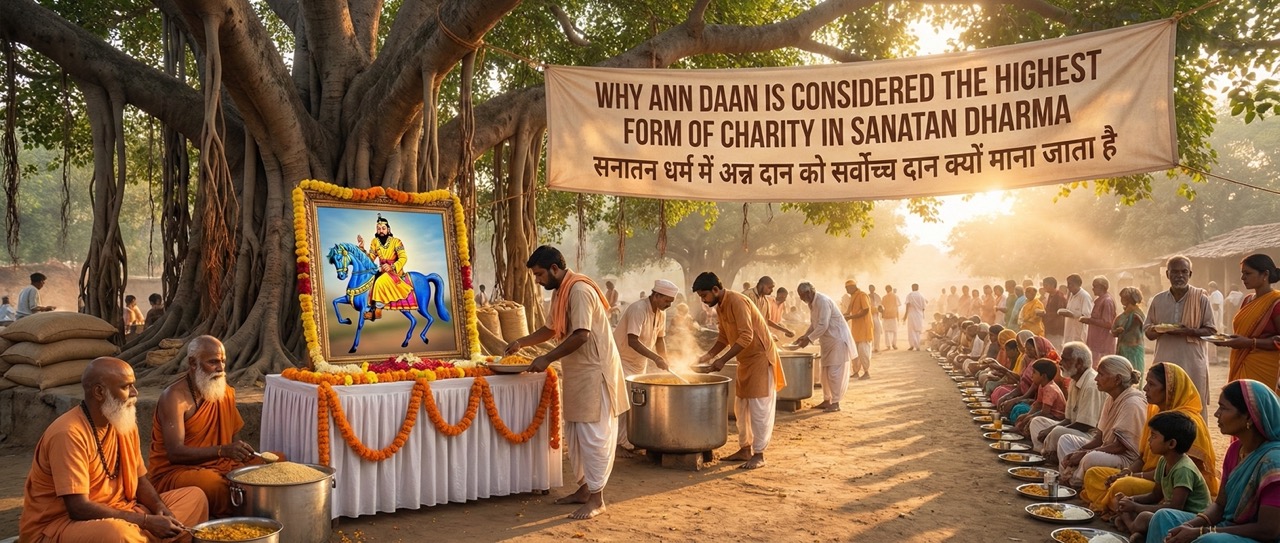
In Sanatan Dharma, charity is not measured by wealth but by impact on life. Among all forms of daan—Vastra Daan, Vidya Daan, Gau Seva, and Arogya Seva—Ann Daan (food donation) is revered as the highest. This belief is rooted in a simple yet profound truth: food sustains life itself.
Feeding the hungry is not merely an act of kindness; it is considered a sacred duty that upholds dharma, compassion, and collective harmony.
What Is Ann Daan?
Ann Daan means the selfless offering of food to those in need, without discrimination or expectation. In Sanatan Dharma, ann (food) is viewed as a divine gift, and sharing it is an act of reverence toward life.
Ann Daan includes:
-
Feeding the hungry and undernourished
-
Supporting community meals and relief kitchens
-
Ensuring nourishment during times of crisis
It is charity in its most immediate and humane form.
Why Is Ann Daan Called the Highest Form of Charity?
Sanatan Dharma places Ann Daan above all other forms of daan because no spiritual or material pursuit is possible without food.
Food:
-
Sustains the body
-
Enables learning and prayer
-
Supports physical strength and mental clarity
-
Preserves dignity and hope
A hungry person cannot think of devotion, education, or upliftment. By removing hunger, Ann Daan creates the foundation upon which all other aspects of life can flourish.
The Spiritual Meaning of Feeding the Hungry
In Sanatan philosophy, the divine is present in all beings. Feeding someone is therefore seen as serving the divine directly.
Ann Daan is believed to:
-
Cleanse negative karma
-
Cultivate compassion and humility
-
Bring peace to the giver and the receiver
-
Create unseen spiritual merit
This is why scriptures emphasize that feeding even one hungry person with sincerity carries immense spiritual weight.
Ann Daan and the Principle of Seva
Ann Daan is not charity in the transactional sense—it is seva in its purest form.
True Ann Daan:
-
Is given without superiority
-
Respects the dignity of the receiver
-
Is performed with gratitude, not obligation
-
Focuses on nourishment, not numbers
When food is offered with compassion, it becomes prasad—an offering sanctified by intent.
Why Ann Daan Is Especially Relevant Today
In the modern world, abundance and hunger exist side by side. Despite progress, countless individuals still struggle for basic nourishment.
Ann Daan today:
-
Addresses immediate human suffering
-
Strengthens social responsibility
-
Restores balance between prosperity and purpose
-
Transforms faith into visible action
Sanatan Dharma teaches that a society that feeds its weakest members remains spiritually strong.
The Role of Temples and Trusts in Ann Daan
Traditionally, temples have been centers not only of worship but also of community nourishment. Through organized food aid and relief efforts, spiritual institutions carry forward this ancient responsibility.
Temple-led Ann Daan:
-
Ensures transparency and discipline
-
Reaches genuinely needy individuals
-
Preserves the sanctity of the act
-
Allows collective participation in seva
Such efforts keep dharma alive beyond rituals.
Ann Daan Is Not About Quantity, but Bhav
Sanatan Dharma places supreme importance on bhav (intention). The spiritual value of Ann Daan is not determined by how much is given, but how it is given.
A simple meal offered with devotion outweighs lavish food given for display. Sincerity transforms food into a sacred offering.
How Individuals Can Participate in Ann Daan
One does not need wealth or special occasions to perform Ann Daan. The practice begins with awareness and compassion.
Ways to participate include:
-
Supporting food donation initiatives
-
Contributing to community kitchens or relief drives
-
Ensuring no food is wasted
-
Feeding someone quietly and respectfully
Even a single act, done consistently, holds spiritual significance.
AEO – Frequently Asked Questions
What is Ann Daan in Sanatan Dharma?
Ann Daan is the selfless donation of food to the hungry, considered the most sacred form of charity.
Why is Ann Daan considered superior to other charities?
Because food sustains life itself, enabling all other forms of growth—spiritual, mental, and physical.
Does Ann Daan remove negative karma?
Sanatan teachings state that feeding the hungry with pure intention helps cleanse past karmic burdens.
Is Ann Daan only done through temples?
No. Individuals can practice Ann Daan personally or through trusted spiritual institutions.
Does the amount of food matter?
No. Intention and compassion matter more than quantity.
Conclusion: Feeding Life Is Serving Dharma
Ann Daan is not an act of generosity—it is an act of responsibility. In Sanatan Dharma, to feed another being is to honor life, uphold dharma, and express true spirituality.
When hunger is removed, dignity is restored. When food is shared, humanity is strengthened.
This is why Ann Daan stands above all charities—not because it is grand, but because it is essential.